Top Virtual Reality Companies in Florida
Virtual Reality in Florida: what’s real, what’s working, and where to look next
Current status of the Florida VR market 🌴
Florida’s VR scene is practical, industry-aligned, and surprisingly deep. Orlando anchors a serious modeling, simulation, and training cluster around defense, aerospace, healthcare, and themed entertainment.
Miami leans into startups, media, and global business ties. Tampa and the Space Coast contribute with enterprise software, cybersecurity, and engineering talent.
It’s less “hype video” and more “operational results.”
Two signposts matter:
- I/ITSEC in Orlando, the world’s largest MS&T conference, keeps VR training grounded in measurable outcomes.
- Magic Leap in Plantation, while focused on AR, shows how Florida’s XR talent pool can pivot to enterprise-grade solutions. Not a VR case per se, but still a useful bellwether.
You’ll also find firms like Talon Simulations in Orlando delivering motion-based VR rigs for training and attractions, and Design Interactive working on human-systems-integration for defense and healthcare. These aren’t gimmicks.
They get deployed, maintained, and audited.
Growth trends to watch 🚀
- Enterprise training first, everything else second. Florida continues to lead in VR for high-stakes training: maintenance, emergency response, medical simulation, and aviation.
The ROI story is clearer here than in pure consumer entertainment.
- Healthcare simulation expands. Hospital systems and med schools are adopting VR for procedure rehearsal and soft-skills training, often in partnership with local providers.
- Tourism, real estate, and attractions use VR selectively. Expect more WebXR and lightweight guided experiences, fewer full-scale headsets for general guests on crowded days.
- Nearshore dynamics. Miami’s position as a gateway to Latin America brings international clients who want bilingual teams, overlapping time zones, and faster deployment cycles.
- Tooling convergence. Unity, Unreal, C#, C++, plus pipelines using Blender or Maya remain standard.
More teams are layering in WebXR, photogrammetry, and cloud streaming to reduce device friction.
Florida’s hubs, meetups, and where to shake hands 📍
- Orlando: I/ITSEC, the Central Florida Research Park ecosystem, and the Navy/Army/AF “Team Orlando” community. Check out the Central Florida Tech Grove for government-industry experimentation.
- Miami: eMerge Americas and a steady flow of global tech visitors. Strong for partnerships and capital introductions.
- Tampa Bay: Synapse Summit and a growing enterprise tech community; good crossover with cybersecurity and healthtech.
- Associations and meetups: VR/AR Association chapters in Orlando and Miami host useful sessions. You’ll also see university-led demos, hackathons, and mixed meetups with game devs and UX pros.
Collaboration with universities and why it matters 🎓
- UCF’s Institute for Simulation and Training and the Florida Interactive Entertainment Academy (FIEA) consistently feed the talent pipeline for serious games and VR training.
- Ringling College of Art and Design produces world-class 3D artists who understand real-time pipelines.
- UF’s Digital Worlds Institute adds research heft and cross-disciplinary teams.
This university-to-industry loop is a competitive advantage. It shortens the time from prototype to production and keeps teams current on human factors, interaction design, and evaluation methods.
Key challenges providers face (and what buyers should ask) 🧩
- Hardware fragmentation and change cycles. A strong vendor will specify why they picked a headset and outline a lifecycle plan with migration options.
- Content longevity. Training scenarios can age fast as procedures change.
Ask about authoring tools, modular content, and maintenance contracts.
- Measurement. Good teams instrument VR sessions, collect evidence, and tie results to KPIs.
If you hear only “immersion” and not “impact,” push back.
- Procurement complexity for government projects. Local providers know the path but timelines can stretch.
Plan for phased pilots.
Quick take for business buyers
- Strongest vertical fit: defense, healthcare, logistics, aviation, and industrial safety.
- Skills to look for: Unity or Unreal, 3D optimization, human factors, data instrumentation, WebXR, and secure dev practices.
- Red flags: no usability testing, no device strategy, no plan for scale, vague ROI.
A small opinion
Florida’s VR is less flashy than the coasts, and that’s a feature. The ecosystem rewards teams that deliver training outcomes, not hype.
The flip side: consumer-facing VR in Florida can feel underfunded compared to enterprise work. If you’re seeking brand-heavy experiential content, pick partners with proven attraction or sports projects, not only defense.
How ITProfiles helps you hire right on the first try ✅
We curate Florida-based VR providers by:
- Verifying domain depth by vertical, not just tech stack
- Reviewing case studies for measurable outcomes and device strategies
- Checking compliance and security for regulated industries
- Tagging teams by skills like Unity, Unreal, WebXR, photogrammetry, and data analytics
- Highlighting bilingual teams and nearshore-friendly delivery models
You get shortlists matched to your budget, timeline, and use case. We can arrange intro calls, share comparable project benchmarks, and suggest a proof‑of‑value pilot structure so you de-risk before scaling.
If you’re scouting Florida VR talent for training, healthcare, or attraction-grade experiences, browse ITProfiles, compare verified portfolios, and pick with confidence. Quick filters, real references, and no fluff.
Takes only 2 mins, 100% free
Average project size: $10,000 to $25,000
Average hourly rate: $50 - $99



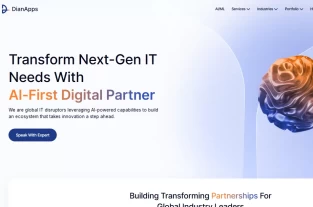























 Verified badges next to some profiles, showing which companies actively manage their listing and which ones we’ve independently verified for credibility.